
Your catalog only
It picks from the products you loaded. Name, price, photo and link come from your store, not from the model, so it cannot make up a product or a price.
AI product recommendations
It listens to what the shopper is after, asks just enough and proposes one or two products from your catalog with the why. It cannot make up a product or a price: it only picks from yours, and the name, price and photo come from your store.
Try it with your store
A “what would you recommend?” with no concrete answer is a sale going cold
Whoever asks wants a name, a price and a reason, not the whole list or a generic reply. The agent proposes one or two products with the reason they fit, and asks the minimum it needs to get it right. Like this:
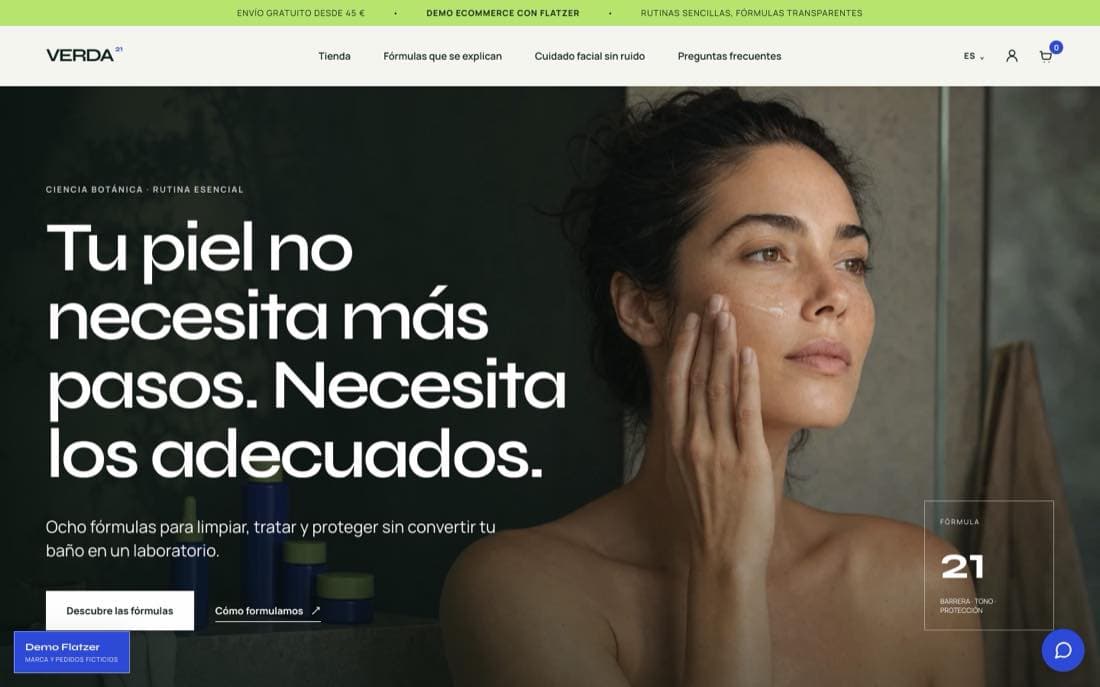
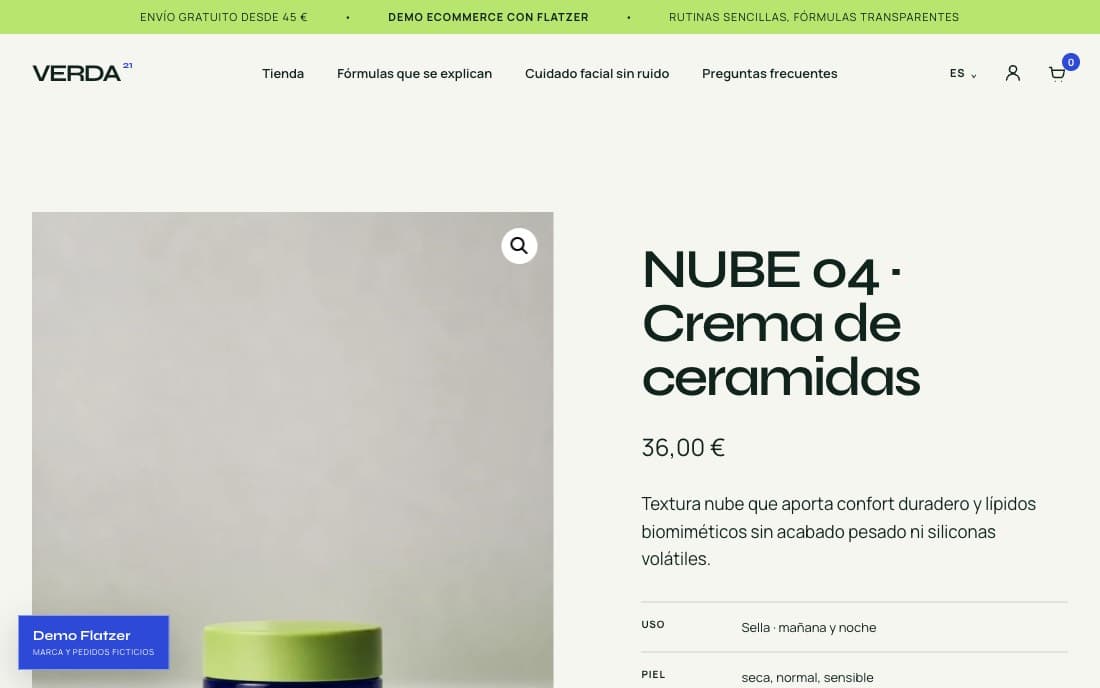
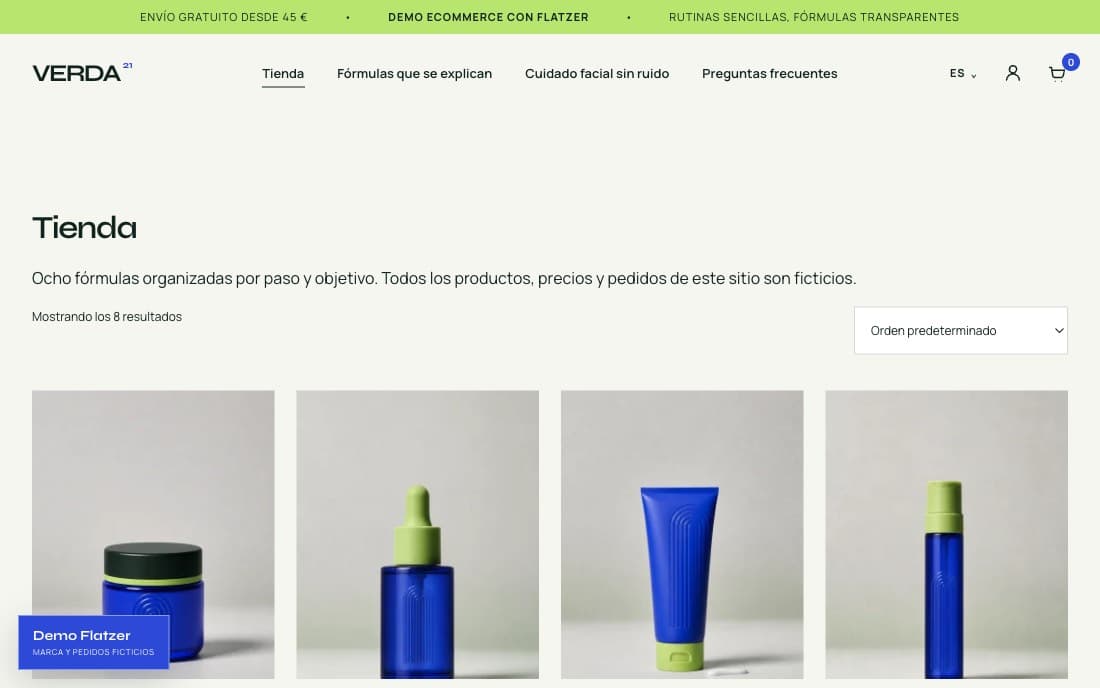
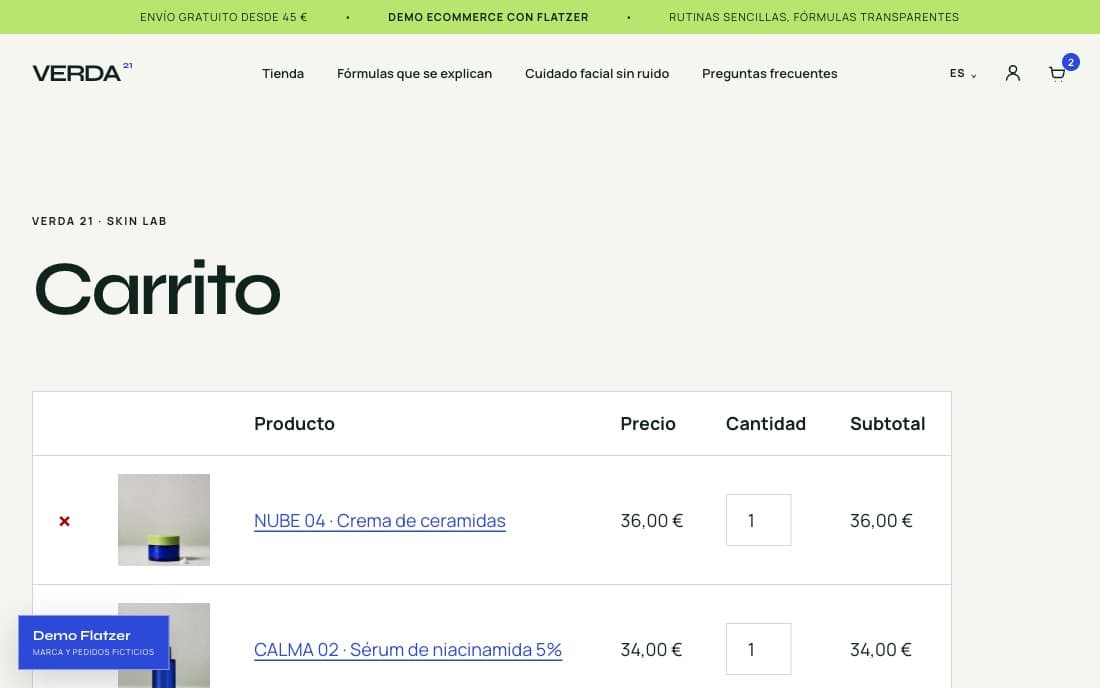
A conversation in VERDA 21, our demo store, opening with a vague request: the agent doesn't dump the catalog, it orients and asks one thing.
Hi, I want to start taking care of my skin but I don't know where to begin.
The simplest way is a three-step routine: cleanse, protect in the morning and one treatment. Does your skin lean dry or oily?
Oily, with the odd breakout.
Then: MAREA 01 to cleanse without tightness, CALMA 02 in the morning to balance sebum, and DUNA 05 as sun protection with an invisible finish. If you'd rather have the set, TRÍADA 21 brings cleanser, antioxidant and sunscreen for 82 €.
And will this get rid of my breakouts?
I can't promise that: it helps balance sebum, but it doesn't treat acne. If it's persistent, a dermatologist is the better call. Shall I open CALMA 02 for you?
One question per message, and at most two before naming a product. It says what each product is for and also what it isn't, and never promises results that don't come from your catalog.
The method is its own; the rules are yours. If your store doesn't want it recommending sets, or talking about certain products, you say so in the dashboard and your instruction wins.
What changes
It picks from the products you loaded. Name, price, photo and link come from your store, not from the model, so it cannot make up a product or a price.
One question per message and at most two before proposing anything. If the request is specific, it answers directly; if it's vague, it orients in three sentences and asks.
It connects what it knows about each product with what the shopper wants, and says what it isn't for too. No invented urgency, no discounts on its own.
Every card leads to the real product page, with its price. If a product is marked out of stock in your catalog, it says so instead of hiding it.
Three sources, and none of them is the internet.
No surprises
Your existing site works as is. We don't ask for access or require any install for the demo.
Try it with your store
We read your store's public pages: products, categories, shipping, and FAQs.
Catalog
As soon as it's ready, you get an email with the link. You go in, ask it what a customer would, and decide.
See the agent in action with your store
https://your-store.com
The shopping path
Flatzer keeps one shopping context across questions, recommendations, website movement, and human help.
The shopper explains the need in their own words, even without knowing a product name.
The agent asks for the constraints that change the recommendation.
It selects specific catalog products and explains why they fit.
It opens an approved product or collection route and can perform configured page actions.
When the agent should stop, a person continues with the conversation context intact.
What changes isn't that it talks: it's what it knows, where it lives, and what it costs.
| Support chat | Loose ChatGPT | Flatzer | |
|---|---|---|---|
| Where it answers from | Your FAQ and macros | Whatever it knows from the internet | Your catalog, exactly as you loaded it |
| Recommends products | No: hands off to a person | Yes, but from any store | Yes, only from your catalog |
| Takes them to the page | No | No: the shopper is outside your site | Yes, through routes you approve |
| Hands off to your team | Yes, that's its job | No | Yes, with full context in the inbox |
| Price | Per resolved conversation or per seat | Free, but outside your store | Flat monthly fee, no sales commission |
A support chat still earns its keep on incidents, and ChatGPT on general questions. Flatzer covers the stretch between the question and the product page.
Detailed comparisons: Tidio · Intercom · Crisp · Chatbase · ChatGPT
Flat pricing
You pay a monthly fee and know the amount before you start. No commission on sales, no charge per conversation or seat, and no extra fee for the AI.
$52.95/mo
To start on one channel
$106.95/mo
For stores with steady traffic
$193.95/mo
For high volume and more channels
Product truth
We separate what the widget does today from the integrations that aren't there yet, so you know what you're testing.
Available now
Not promised
Try it with your website
Paste your site's URL and we'll prep a demo on your real catalog.