From WhatsApp messages to a brief for renovations and installers
WhatsApp makes it easy to send text, photos and audio, but it also fragments a request over several days. In the renovations and installers scenario, Flatzer transforms this declared material into a reviewable brief without pretending to have a technical solution. The team must be able to return from each field to the original fragment. That traceability speeds correction when a transcript fails and avoids discussing which version was used to prepare the assessment.
A chronological thread is not a brief
The last message can correct a measurement of the first, a photo can belong to another room and an audio can add an access restriction. Reading from top to bottom does not guarantee that the team sees the current version.
The brief must be grouped by fields: scope, location, dimensions, deadline, access, available material and pending questions. Preserve the source of each data so that the professional can verify it. Add a version marker when the client corrects information and prevents overwriting the previous value without a trace. For critical measurements, show unit, stated accuracy, and whether they come from an estimate, photograph, or plan. These details affect the assessment and prevent an isolated figure from appearing more reliable than it is.
If two messages contradict each other, don't silently choose one. Flag the conflict and request clarification or referral. A visible uncertainty is more useful than a seemingly clean but incorrect summary.
Treat photos and audios as provided evidence
An image helps contextualize, but does not validate structure, hidden facilities or regulatory compliance. The agent can associate it with a room and describe which file they received, without issuing an opinion.
The audios need a reviewable transcript and a link to the source. Material names, measurements and addresses are prone to errors; highlight those fields for confirmation rather than hiding uncertainty.
Define size, format and conservation limits before implementing the channel. A textual sandbox can design the contract, but a real solution needs privacy and file access controls.
The summary should show what is missing
A useful brief is not intended to appear complete. You can indicate “exact measurements pending”, “photos received” or “access to be confirmed”. These signals prepare the next question and avoid quoting from assumptions.
Add a clear destination: the person, trade or area that will review the request. The handoff must follow business rules, not a technical classification invented by the model.
The client receives a confirmation of the registration, not the order. The visit, solution and quote remain under professional review until there are real data and decisions.
Test the flow with genuinely messy conversations
Include messages sent on different days, corrections, photos without context, and mixed requests. Check that the brief consolidates changes and retains open questions.
Ask the team to use it to decide the next action. If you must return to the thread to understand the assignment, improve structure or sources. If the summary hides doubts, tighten the rules of conflict.
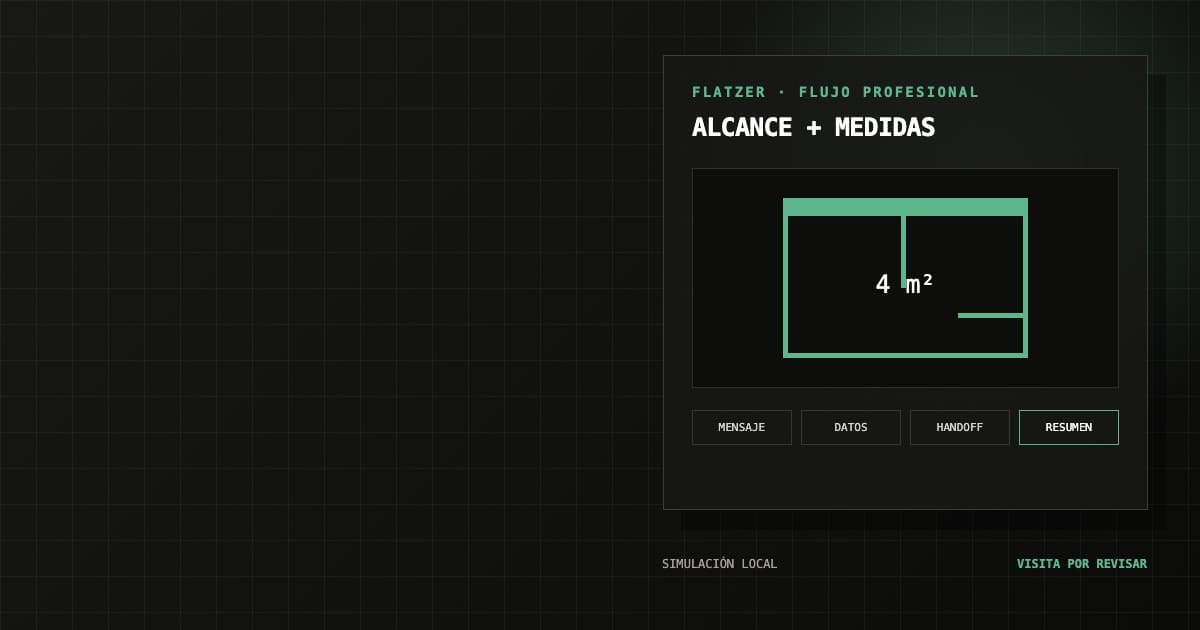
The simulation of renovations and installers shows a brief with measurements still pending and local handoff. It is the appropriate result before talking about a quote or site visit.
Related articles
How to qualify a renovation before arranging a visit
Structure scope, location, deadline and available material before sending a professional to site, without inventing solutions or quotes.
Read more
AI agent actions: what an execution receipt should show
Learn to distinguish conversation, execution, and evidence to evaluate professional AI agents without relying on ambiguous promises.
Read more
The real cost of responding late to a professional client
Analyze where an opportunity is lost when a response is late and how to automate the first job without inventing results.
Read more